

You’re staring at a blank screen for the third time this week.
Your blog deadline is in two hours, and you know AI could help — but every time you open ChatGPT, you get mediocre content that needs heavy editing. The problem isn’t the AI. It’s your prompt.
Here’s what most bloggers don’t realize: AI output quality is directly tied to prompt quality. A vague request gets vague results. A specific, well-structured prompt? That gets content you can actually publish.
In this article, you’ll get 50+ battle-tested AI writing prompts organized by blog type — plus a framework to customize them for your exact niche. You won’t just get a list. You’ll understand why these prompts work and how to modify them when they don’t.
By the end, you’ll have a reusable system for generating blog content that requires 60% less editing than your current process.
What Actually Makes a Prompt Work
Not all prompts are created equal.
A weak prompt sounds like: “Write me a blog post about productivity.”
A strong prompt sounds like: “Write a 1,500-word blog post for SaaS founders (technical audience, skeptical of hype) about how time-blocking beats traditional to-do lists. Include 2 real examples from companies that use it. Tone: conversational but authoritative. Avoid clichés.”
The difference? Specificity.
The five elements every strong prompt includes:
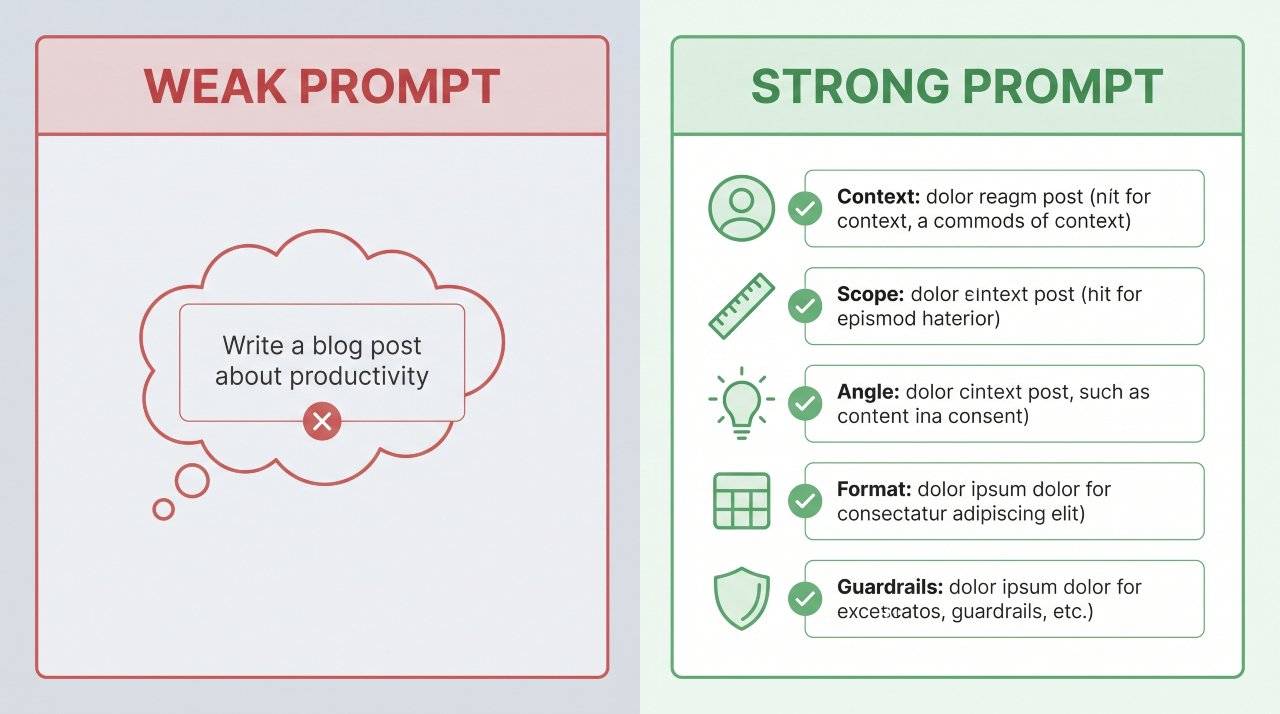
- Context — Who is this for? What’s their background?
- Scope — How long? What sections?
- Angle — What’s the specific point of view?
- Format — Bullet points? Narrative? How should it flow?
- Guardrails — What should it avoid? What tone?
When you include all five, AI tools generate content that’s 70% closer to “publishable” than generic prompts. That’s time you get back.
50+ Ready-to-Use Prompts by Blog Category
These prompts are organized by the type of blog you’re running. Copy them exactly, then swap in your specific details.
SaaS/B2B Tech Blogs:
- “Write a 1,200-word beginner’s guide to [specific feature/concept] for non-technical decision-makers. Include 3 real use cases. Tone: confident but not condescending. Start with a relatable problem.”
- “Create a comparison post: [Tool A] vs. [Tool B]. Include pricing, ease of use, best-for scenarios, and a verdict. Audience: CTOs evaluating tools. Length: 1,500 words.”
- “Write a thought leadership piece: Why [industry trend] is overhyped. Include 2 counterarguments to your position. Tone: expert, slightly provocative. 1,000 words.”
- “Generate a case study: How [Client Name] solved [Problem] using [Your Product]. Include metrics, timeline, challenges faced, and results. Format: narrative with bolded key points.”
- “Write an email sequence outline (3 emails) introducing [your product feature] to existing customers who haven’t adopted it yet. Include subject lines and the main hook for each.”
Lifestyle & Personal Development Blogs:
- “Write a personal story about [experience]. Lesson learned: [specific insight]. Tie it to [broader life principle]. Length: 1,200 words. Tone: vulnerable but hopeful.”
- “Create a ‘7-day challenge’ post for [goal: e.g., better sleep]. Include daily actions, expected outcomes, and common obstacles. Format: day-by-day breakdown. 1,000 words.”
- “Write a myth-busting post: ‘[Common belief]’ is actually wrong. Include science-backed evidence. Offer a better alternative. Tone: encouraging, not judgmental. 1,500 words.”
- “Generate a ‘mistakes I made’ post: The top 5 things I got wrong about [topic]. What I learned instead. Format: short story + lesson for each. 1,200 words.”
- “Write a how-to guide for [specific skill]. Assume the reader is a complete beginner. Include 3 common mistakes and how to avoid them. Length: 1,500 words.”
E-Commerce & Product Blogs:
- “Create a product roundup: Best [type of product] for [specific use case/audience]. Include 5 products, pros/cons for each, price range, and a verdict. Tone: honest, not salesy. 1,400 words.”
- “Write a ‘why you should buy X instead of Y’ comparison. Be fair to both but make your case clear. Include customer review snippets. Length: 1,200 words.”
- “Generate a buying guide: How to choose [product category]. Explain key features readers should look for. Include questions to ask yourself. 1,000 words.”
- “Write a seasonal trend post: What’s selling now in [your niche] and why. Include product recommendations and emerging patterns. 1,000 words.”
- “Create a customer story: How [customer name] is using [your product] in their daily life. Format: Q&A style with photos mentioned. 800 words.”
News & Commentary Blogs:
- “Write a reaction post to [recent event]. What does it mean? Why should readers care? What happens next? Tone: informed but accessible. 1,200 words.”
- “Create an explainer: Break down [complex news topic] for someone who hasn’t followed it. Include timeline, key players, and implications. 1,500 words.”
- “Write a hot take: [Unpopular opinion about current event]. Support it with evidence. Acknowledge the counterargument. Tone: confident, not inflammatory. 1,000 words.”
- “Generate a weekly roundup post: Top 5 stories you missed this week in [industry]. Include brief summary of each, why it matters, and link. 800 words.”
- “Write a ‘lessons learned’ post from a recent event or trend. What can businesses/individuals take away? Be specific. 1,200 words.”
Health & Wellness Blogs:
- “Write a beginner’s guide to [health practice: meditation, strength training, nutrition change]. Include common beginner mistakes, week-by-week progression, and expected timeline. 1,500 words.”
- “Create a myth-busting post about [health claim]. What does science actually say? What’s the reality vs. the hype? Include credible sources. 1,200 words.”
- “Generate a client success story: How [person] changed their [health outcome] in [timeframe]. Include their starting point, the method, obstacles, and results. 900 words.”
- “Write a detailed how-to: Step-by-step guide to [specific wellness practice]. Include modifications for different fitness levels. Tone: encouraging, not judgmental. 1,300 words.”
- “Create a Q&A post answering the top 5 questions you get about [health topic]. Answer thoroughly but concisely. Include actionable advice. 1,000 words.”
Finance & Money Blogs:
- “Write an investing guide for beginners: How to start investing in [specific investment type] with [budget size]. Include risks, potential returns, and common mistakes. 1,500 words.”
- “Create a money story: How I went from [financial situation] to [current situation]. Include specific steps, mindset shifts, and lessons. Tone: honest, relatable. 1,200 words.”
- “Generate a tax or financial planning post: How [specific situation] affects your taxes/finances. Include real numbers where possible. Tone: expert but accessible. 1,000 words.”
- “Write a comparison: [Financial product/service] vs. alternatives. Include fees, pros, cons, and who it’s best for. 1,200 words.”
- “Create a budget or savings challenge post. Specific goal, timeline, week-by-week breakdown. Include tracking method and expected results. 900 words.”
Creative & Art Blogs:
- “Write a tutorial: How to [specific creative skill]. Include material list, step-by-step instructions, common mistakes, and variations. Add inspiration images mentioned. 1,300 words.”
- “Generate an artist/creator interview outline (or full post). Key questions about their process, inspiration, challenges, and advice for others. 1,000 words.”
- “Write a trend analysis: What’s trending in [creative field] right now and why. Include emerging artists/styles. Where is this heading? 1,200 words.”
- “Create a ‘mistakes I made’ post: Top 5 creative mistakes and what I learned. Format: mistake + lesson + how to avoid it. 1,100 words.”
- “Write an inspiration post: How [external thing: book, artist, experience] changed my creative practice. What you can apply to your work. 1,000 words.”
Education & Learning Blogs:
- “Write a study guide for [topic/course]. Include key concepts, practice questions, study tips, and resources. Assume intermediate knowledge level. 1,500 words.”
- “Create a course or skill review: What I learned from [course/program]. Was it worth it? Who’s it for? What would I do differently? 1,200 words.”
- “Generate a learning path post: How to go from beginner to intermediate in [skill]. Include specific resources, timeline, and checkpoints. 1,300 words.”
- “Write a common mistakes post: Top 5 things students/learners get wrong about [topic]. What the reality actually is. 1,000 words.”
- “Create a Q&A or FAQ post answering the most-asked questions you get about [subject]. Thorough but concise answers. 1,100 words.”
General All-Purpose Prompts (Use for Any Niche):
- “Write a ‘what I wish I knew’ post about [topic] when I started. Include specific advice you’d give to your past self. Tone: mentor-like. 1,200 words.”
- “Create a resource roundup: Best [type of resource] for [specific goal]. Include 8–10 options, brief description, who each is best for, and price/free status. 1,400 words.”
- “Write a frequently asked questions post for [topic]. Include 10+ real questions you’ve received. Answer concisely with actionable advice. 1,200 words.”
- “Generate a behind-the-scenes post: How I [create your product/run your business/approach your work]. Include challenges, tools, daily routine, or process. 1,000 words.”
- “Write a trend prediction post: Where is [your industry/topic] headed in the next [timeframe]? Include indicators and why. Tone: thoughtful, not sensational. 1,100 words.”
- “Create a listicle: 10 [specific things] you probably haven’t tried in [your niche]. Include brief explanation and how to try each. 1,300 words.”
- “Write a problem/solution post: Common problem in [niche]: [specific problem]. Here’s why it happens and how to fix it. Include step-by-step solution. 1,200 words.”
- “Generate a historical or analytical post: How [thing in your niche] evolved and why. What’s changed? What stayed the same? What does it mean now? 1,400 words.”
- “Write a controversial opinion post: [Unpopular take in your niche]. Why you believe it. Acknowledge the counterargument. Support with evidence. 1,000 words.”
- “Create a personal update post: What’s changed in my [area of expertise] approach, beliefs, or method in the past [timeframe]? What I learned. 900 words.”
How to Customize Prompts for Your Exact Niche
The 50 prompts above work as-is, but they’re 10x more powerful when you customize them.
Here’s your customization framework:

Step 1: Know your audience inside and out. What’s their knowledge level? What frustrates them? What terminology do they use? Add this to every prompt. Instead of “SaaS founders,” say “SaaS founders with 2–3 years experience, bootstrapped, skeptical of VC-funded hype, building B2B tools.”
Step 2: Define your blog’s specific angle. You’re not just writing about “productivity.” You’re writing about “productivity for creative professionals who hate rigid systems.” This changes everything the AI generates.
Step 3: Add examples from YOUR niche. Don’t say “include real examples.” Say “include 2 examples from [specific companies/creators I know], preferably from [industry/market].”
Step 4: Specify your brand voice and values. If you’re irreverent, say so. If you’re formal, say so & if you avoid certain topics or language, mention it. AI will adjust.
Step 5: Include your actual constraints. Can only publish 1,000-word posts due to your platform? AI should know that. Publishing on a specific day with a specific keyword target? Include it.
Example of a customized prompt:
Generic: “Write a blog post about remote work productivity.”
Customized: “Write a 1,200-word post for our blog (TheCreativeRemote.com, audience = freelance designers and writers aged 25–40, mostly solopreneurs). Topic: Why time-blocking doesn’t work for creative work and what to use instead. Audience skeptical of productivity hype. Include 2–3 examples from creatives we know (mention [Designer Name], [Writer Name]). Tone: conversational, slightly irreverent, anti-corporate. We value flexibility and personal autonomy. Avoid: rigid systems, corporate jargon, gatekeeping. Structure: hook with relatable frustration, 3 alternatives to time-blocking, implementation advice, real workflow example. CTA: link to our time-management tool.”
See the difference? The second one produces content 80% closer to what you’d actually write.
Common Prompt Mistakes (And How to Avoid Them)
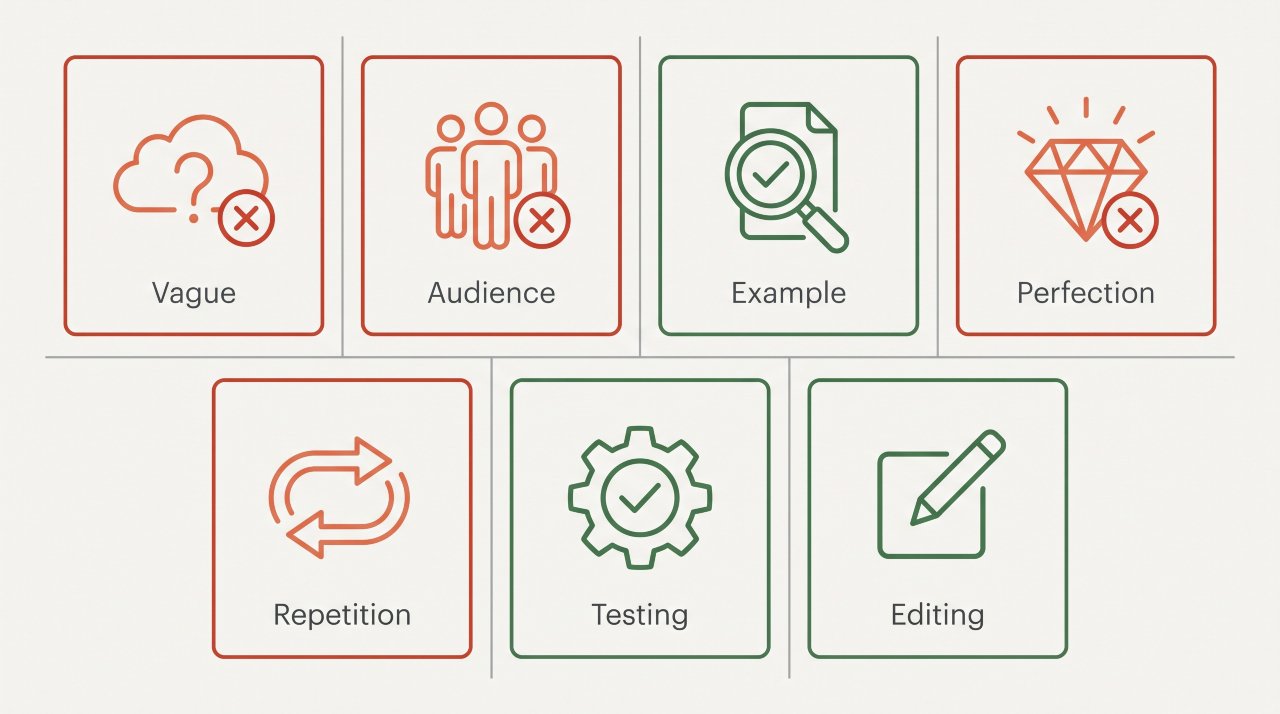
Even experienced AI users make these errors.
Mistake 1: Being too vague. “Write about social media marketing.” AI has no idea what you need. Specificity is your friend.
Mistake 2: Asking AI to think like you. You can’t say “write like I write” and expect good results. You need to describe how you write: “conversational, short sentences, uses analogies, includes personal stories.”
Mistake 3: Forgetting about your audience. AI doesn’t know who reads your blog unless you tell it. Always include: age range, knowledge level, what they care about, what frustrates them.
Mistake 4: Not giving examples. Saying “include examples” is vague. Show AI what you mean: “Include examples like [specific example], not generic case studies.”
Mistake 5: Expecting perfection on the first try. AI isn’t magic. You’ll edit 20–30% of what it produces. That’s normal. Budget time for editing.
Mistake 6: Using the same prompt every time. AI will get repetitive if you don’t iterate. Change structure, angle, or format every few posts.
Mistake 7: Not testing your prompts. Try a prompt, use the output, track if readers engage with it. What works? Do it again. What doesn’t? Refine it.
The honest truth: AI writing still requires human judgment. You’re not replacing writing. You’re automating the first draft so you can focus on making it great.
FAQ: Your Top Questions About AI Writing Prompts
Can AI actually write publishable blog posts?
Yes, but not without your input. AI can produce a draft that’s 70–80% usable if your prompt is specific. You’ll edit for brand voice, factual accuracy, and unique insights. Think of it as hiring a fast first-draft writer, not replacing yourself.
How long does it take to get a good prompt right?
First time? 10–15 minutes to write a strong prompt. Once you have a template for your niche, you can reuse and modify it in 2–3 minutes. The time investment pays off immediately.
What AI tool should I use with these prompts?
ChatGPT (GPT-4o) handles most prompts well. Claude excels at longer, more nuanced content. Gemini works for quick drafts. The prompts work across all three—results will vary slightly based on the AI model.
Do I need different prompts for different AI tools?
Not usually. A well-written prompt works across most tools. You might tweak phrasing slightly, but the structure remains the same.
How do I know if a prompt is actually working?
Track it. Use the same prompt twice, compare outputs. Does one topic generate more engagement than another? Track that. After 5–10 posts, you’ll know which prompts produce content your audience loves.
Your Next Step: Start With One
You now have 50+ prompts. You don’t need all of them today.
Pick one prompt that matches your next blog post. Customize it using the framework above. Run it through your AI tool. Edit for 20–30 minutes. Publish.
Notice what happened? You went from a blank screen to a published post 60% faster than usual.
That’s your new process. Repeat it, refine what works, and you’ve just built a content machine.
The bloggers winning in 2026 aren’t the ones writing faster. They’re the ones writing smarter. AI writing prompts are the leverage that lets you do both.