
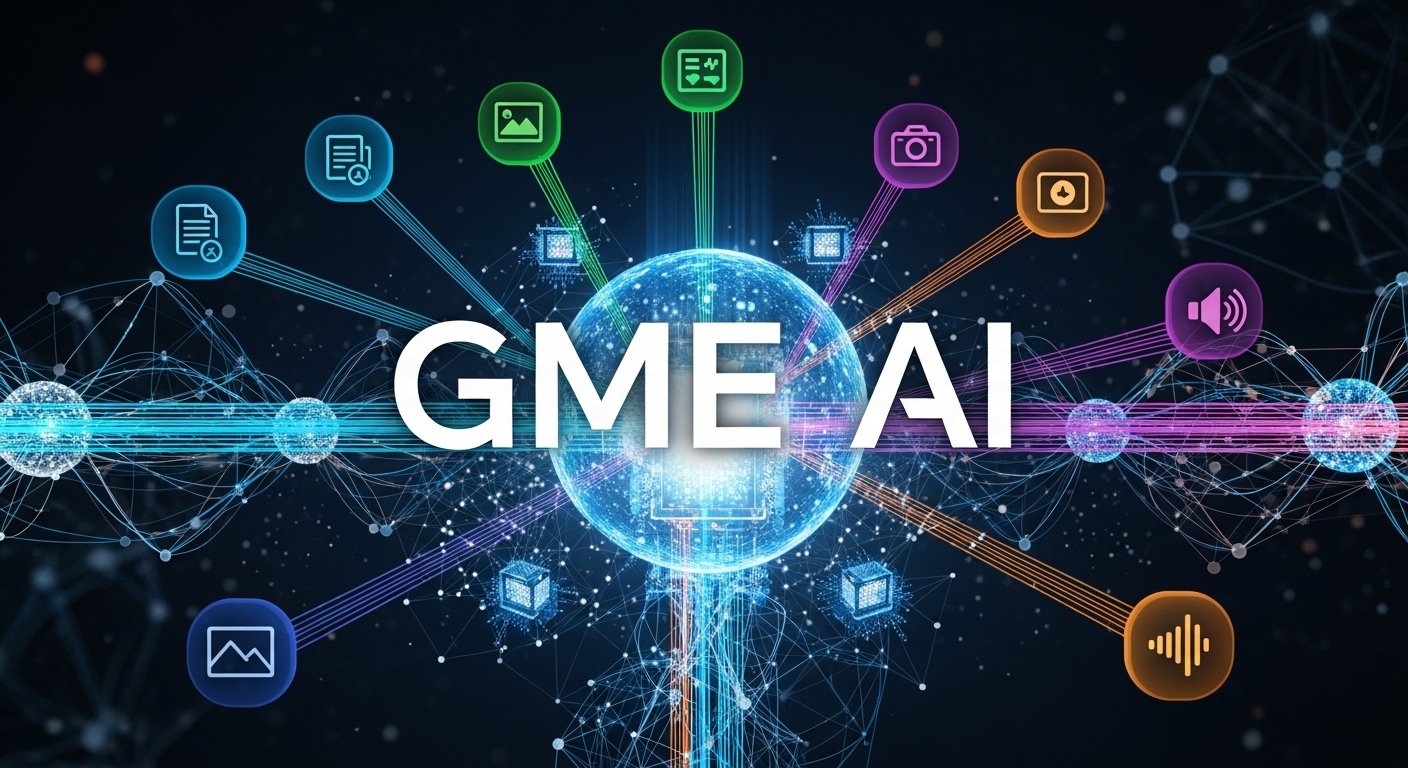
Artificial intelligence continues to break new ground, and GME AI stands at the forefront of this shift. You might wonder how businesses process massive amounts of complex data while generating creative, accurate solutions. The answer lies in Generative Multimodal Enterprise Artificial Intelligence (GME AI).
This guide explores exactly what GME AI is and why it matters to modern businesses. We will dive into its core applications, uncover its primary benefits, and examine its impact across various industries. By the end of this post, you will understand how this technology shapes the future of work and how you can prepare for its adoption.
What is GME AI?
GME AI refers to enterprise-level artificial intelligence systems capable of processing multiple types of data simultaneously. Unlike older AI models that only handle text or numbers, GME AI understands text, images, audio, and complex datasets all at once. This multimodal approach allows the system to generate highly sophisticated, context-aware outputs.
These systems are built specifically for large-scale enterprise environments. They integrate directly into existing business workflows to streamline operations. Because they are generative, they do not just analyze data; they create new content, predictive models, and strategic recommendations.
Key features of GME AI include advanced natural language processing, real-time data synthesis, and high-level security protocols. Businesses use these features to safely handle sensitive information while extracting valuable insights. The system learns continuously from enterprise data, making it smarter and more efficient over time.
Key Benefits of GME AI
Implementing GME AI offers several massive advantages for organizations. First, it drastically increases operational efficiency by automating complex, time-consuming tasks. Employees spend less time manually sorting data and more time focusing on high-level strategy and creative problem-solving.
Second, GME AI improves decision-making accuracy. By analyzing vast amounts of historical and real-time data, the AI identifies hidden patterns that humans might miss. This leads to better forecasting, reduced risks, and more profitable business strategies.
Finally, it delivers highly personalized experiences for both customers and employees. GME AI can tailor marketing messages, customize user interfaces, and adapt training materials to individual learning styles. This level of personalization boosts engagement and drives higher conversion rates across the board.
Transforming Major Industries
GME AI is not just a theoretical concept; it actively reshapes how essential sectors operate daily. Let us explore how it impacts three major industries.
Revolutionizing Finance
The financial sector relies heavily on data accuracy and speed, making it a perfect match for GME AI. Banks and investment firms use these systems to detect fraudulent activity in real time. The AI analyzes transaction patterns across multiple channels, instantly flagging anomalies that suggest fraud.
Furthermore, GME AI automates complex financial reporting and compliance tasks. It reads through changing regulations and updates internal policies automatically, saving thousands of hours of legal review. Investment analysts also use it to generate predictive market models based on global news, historical trends, and social sentiment.
Advancing Healthcare
In healthcare, GME AI quite literally saves lives by improving diagnostic accuracy. Medical professionals use multimodal AI to analyze patient records, medical imaging, and lab results simultaneously. The system highlights potential health issues much earlier than traditional screening methods allow.
GME AI also accelerates drug discovery and development. Pharmaceutical companies deploy the AI to simulate how different chemical compounds interact with specific diseases. This reduces the research phase from years to mere months, bringing vital treatments to market much faster.
Reshaping Retail
Retailers use GME AI to completely overhaul the shopping experience. Supply chain optimization represents one of the biggest wins for this sector. The AI predicts inventory needs by analyzing local weather patterns, social media trends, and past purchasing behavior, ensuring stores never run out of popular items.
On the consumer side, GME AI powers advanced virtual fitting rooms and hyper-personalized product recommendations. When a customer browses an online store, the AI analyzes their past purchases and current browsing behavior to generate dynamic, custom storefronts. This drastically improves customer satisfaction and boosts sales.
Real-World Case Studies
Many forward-thinking organizations already see massive returns from their GME AI investments. For example, a global banking institution recently implemented a multimodal AI system to handle customer service inquiries. The AI processed voice calls, text chats, and emailed documents simultaneously. This resulted in a 40% reduction in wait times and a significant boost in customer satisfaction scores.
In the healthcare sector, a major research hospital deployed GME AI to assist radiologists. The AI analyzed thousands of X-rays and MRI scans, cross-referencing them with patient histories in seconds. Radiologists reported a 25% increase in early tumor detection rates, proving the technology’s immense value in clinical settings.
A leading fashion retailer used GME AI to tackle inventory waste. By integrating the AI into their global supply chain, they generated highly accurate demand forecasts for different regions. This move reduced excess inventory by 30% and significantly cut their carbon footprint, showcasing both economic and environmental benefits.
Future Trends in GME AI Technology
The capabilities of GME AI will only expand in the coming years. We expect to see a sharp increase in autonomous AI agents capable of executing complex business processes from start to finish. Instead of just recommending a marketing strategy, future GME AI will design the campaign, generate the assets, and deploy the ads without human intervention.
Another major trend is the democratization of enterprise AI. As the technology becomes more accessible, mid-sized businesses will start leveraging the same powerful tools currently reserved for massive corporations. This will level the playing field, allowing smaller companies to compete globally.
Finally, we will see stronger frameworks for AI ethics and governance. As GME AI handles more sensitive tasks, industries will establish strict guidelines to ensure transparency and fairness. This focus on ethical AI will build public trust and encourage even wider adoption across all sectors.
Next Steps for Your Business
GME AI represents a fundamental shift in how organizations process information and deliver value. By embracing this technology, your business can unlock new levels of efficiency, accuracy, and customer satisfaction. The transition requires careful planning, but the long-term rewards easily justify the effort.
To get started, conduct a thorough audit of your current data infrastructure. Identify bottlenecks in your workflows where automated, multimodal analysis could provide immediate relief. Speak with enterprise AI consultants to explore customized solutions that fit your specific industry needs. By taking these steps today, you position your organization to thrive in an increasingly automated future.