
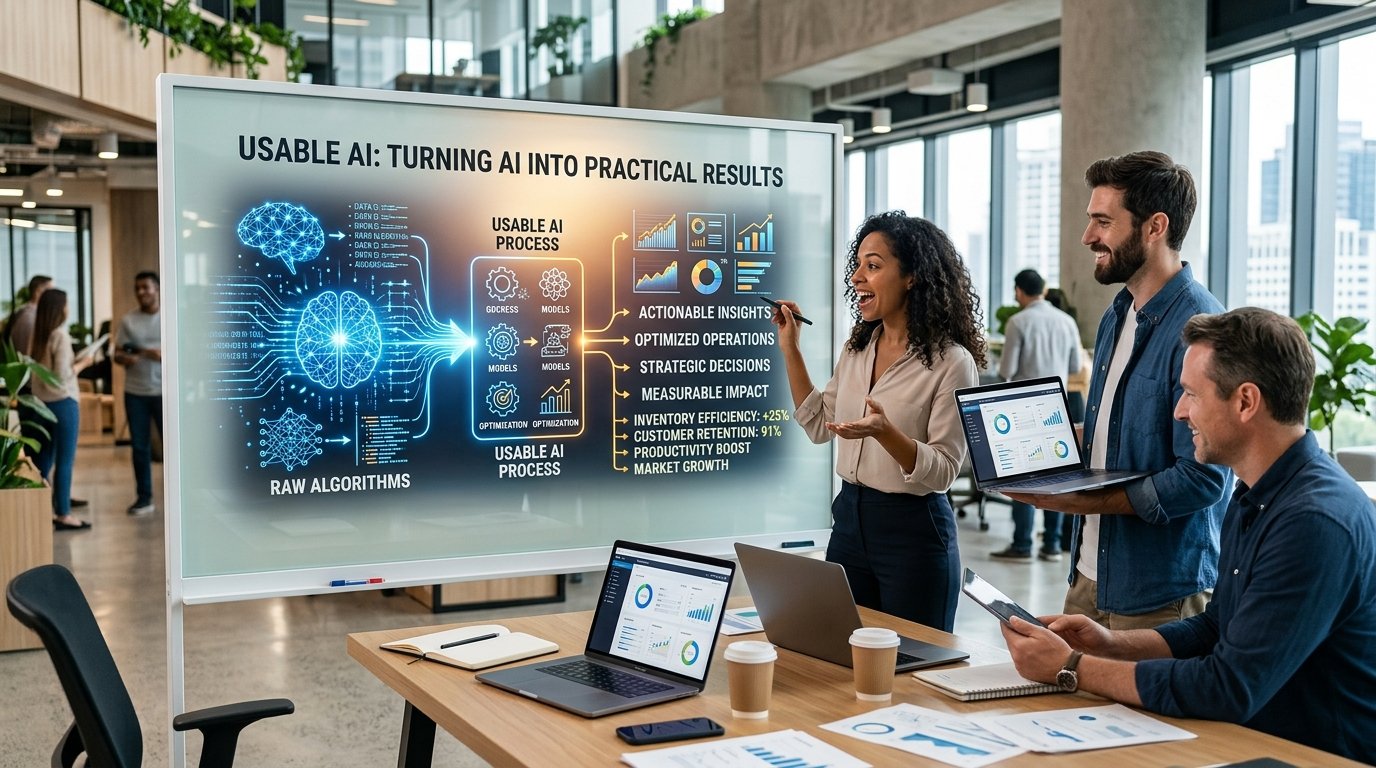
Artificial Intelligence (AI) is no longer just a buzzword; it’s becoming an integral part of our daily lives. From personalized recommendations on streaming platforms to virtual assistants managing our schedules, the potential of usable ai seems limitless. Yet, while many organizations invest heavily in AI technologies, not all see practical results from their efforts.
What if there was a way to bridge this gap? Enter Usable AI—a concept that focuses on making artificial intelligence accessible and effective for everyday applications. This approach transforms complex algorithms into user-friendly tools that can drive real outcomes for businesses and individuals alike. Let’s dive deeper into what usable AI means and how it’s reshaping the landscape of technology as we know it.
Understanding the Limitations of Traditional AI
Traditional AI has made impressive strides, yet it’s not without its flaws. Many systems rely heavily on vast amounts of structured data. When faced with unstructured or incomplete information, their performance can falter.
Moreover, traditional models often lack adaptability. They excel in specific tasks but struggle to generalize beyond predefined scenarios. This rigidity limits their effectiveness in dynamic environments.
Bias is another critical concern. AI trained on skewed datasets can produce biased outputs, perpetuating existing inequalities rather than solving them.
Transparency remains a significant hurdle. Understanding how decisions are made by complex algorithms can be challenging for users and stakeholders alike. As a result, trust issues arise when deploying these technologies in sensitive areas like healthcare or finance.
Recognizing these limitations is essential for businesses seeking to leverage artificial intelligence effectively.
The Concept of Usable AI
Usable AI bridges the gap between advanced technology and practical application. It transforms complex algorithms into user-friendly tools that anyone can harness.
At its core, usable AI emphasizes accessibility. This means designing systems that are intuitive, allowing non-experts to benefit from artificial intelligence without deep technical knowledge.
The focus shifts from mere capability to functionality. Usable AI prioritizes real-world solutions over theoretical advancements. Businesses can leverage these tools efficiently in day-to-day operations.
In essence, usable AI is about making artificial intelligence a reliable partner rather than just an impressive concept. It empowers users by providing actionable insights and automating repetitive tasks seamlessly. With this approach, organizations can unlock potential previously thought unattainable for everyday users.
Benefits of Usable AI for Businesses
Usable AI offers a wealth of advantages for businesses looking to enhance efficiency and productivity. One primary benefit is improved decision-making. With data analysis capabilities, usable AI can sift through vast amounts of information quickly, identifying trends that human analysts might miss.
Another significant perk is cost reduction. Automating routine tasks frees employees to focus on more strategic initiatives. This not only boosts morale but also fosters innovation within teams.
Customer engagement sees a remarkable enhancement as well. Usable AI personalizes interactions based on individual preferences, leading to higher satisfaction rates. Chatbots and virtual assistants streamline support processes while providing instant responses.
Moreover, scalability becomes effortless with usable AI solutions in place. As your business grows, these systems adapt seamlessly to evolving demands without the need for extensive reconfigurations or overhauls in infrastructure.
Real-World Examples of Usable AI in Action
Retailers are increasingly harnessing usable AI to enhance customer experiences. For instance, companies like Amazon utilize machine learning algorithms to analyze shopping habits. This allows them to recommend products tailored specifically for each user.
In healthcare, AI-driven diagnostic tools are making waves. Systems such as IBM Watson assist doctors in identifying diseases faster and more accurately. They sift through vast amounts of data, offering insights that can lead to life-saving interventions.
Manufacturing has also seen a shift with the adoption of usable AI. Predictive maintenance systems monitor equipment health in real time. By forecasting breakdowns before they happen, companies reduce downtime and save costs.
Financial institutions leverage usable AI for fraud detection as well. Advanced algorithms analyze transaction patterns swiftly, flagging any anomalies that might indicate fraudulent activities within seconds.
These examples showcase how versatile and impactful usable AI can be across various industries.
How to Implement Usable AI in Your Organization
Implementing usable AI in your organization begins with identifying specific problems that AI can solve. Engage key stakeholders to assess pain points and areas for improvement.
Next, select the right tools and technologies tailored to your needs. Consider user-friendly platforms that simplify integration without overwhelming employees.
Training is crucial. Provide resources and workshops that empower your team to understand the technology. This builds confidence and promotes proper usage.
Encourage collaboration across departments. Usable AI thrives when insights from various fields contribute to its application, fostering innovation while ensuring diverse perspectives are considered.
Monitor performance closely. Establish metrics to evaluate effectiveness regularly, allowing you to make necessary adjustments for optimal results as your organization evolves.
Challenges and Considerations with Usable AI Implementation
Implementing usable AI comes with its own set of challenges. One major hurdle is data quality. Garbage in, garbage out holds true for AI systems. Poor or inconsistent data can lead to inaccurate results.
Another consideration is user adoption. Employees may resist new technology if they lack proper training or understanding of its benefits. Change management strategies are essential for easing this transition.
Additionally, ethical concerns loom large. Usable AI must be transparent and fair to gain trust among users and stakeholders. Misuse or bias in algorithms can create significant backlash.
Regulatory compliance also plays a role in implementation considerations. Organizations must navigate complex legal landscapes that govern AI usage.
Ongoing support and maintenance are crucial for success. Without adequate resources allocated to these areas, even the best usable AI initiatives can falter over time.
The Future of Usable AI and Its Impact on Society
As we look ahead, the landscape of usable AI is poised for transformative changes across various sectors. Imagine healthcare systems equipped with intuitive AI tools that enhance diagnostics and streamline patient care. This could lead to faster recovery times and improved outcomes.
Education stands to gain significantly as well. Usable AI can create personalized learning experiences tailored to individual student needs. Such advancements can foster greater engagement and drive academic success.
In the workplace, automation powered by usable AI will redefine job roles, allowing human workers to focus on more creative and strategic tasks. This shift may lead to unprecedented levels of innovation.
On a societal level, accessible AI technology has the potential to bridge gaps in underserved communities. By democratizing access to information and resources, we could witness a more equitable society where everyone benefits from technological progress.
Embracing Usable AI for Practical Results
Embracing usable AI means recognizing its transformative potential across various sectors. By focusing on practical applications, organizations can bridge the gap between advanced technology and day-to-day operations. This shift not only enhances productivity but also empowers teams to make informed decisions based on real-time data.
As businesses integrate it into their workflows, they unlock new opportunities for innovation. The ability to automate routine tasks allows human resources to focus on strategic initiatives that drive growth. Additionally, leveraging insights from AI enables companies to tailor their services more effectively, meeting customer needs with precision.
The journey toward adopting it requires a mindset of continuous learning and adaptation. Organizations must remain agile in navigating challenges while embracing the benefits that come with intelligent systems. As these technologies evolve, so too will the ways we interact with them.
By fostering an environment where usable AI thrives, businesses position themselves at the forefront of technological advancement. This proactive approach ensures they remain competitive in an increasingly digital world while delivering tangible results that resonate beyond just numbers or metrics—ultimately enhancing overall experiences for employees and customers alike.