
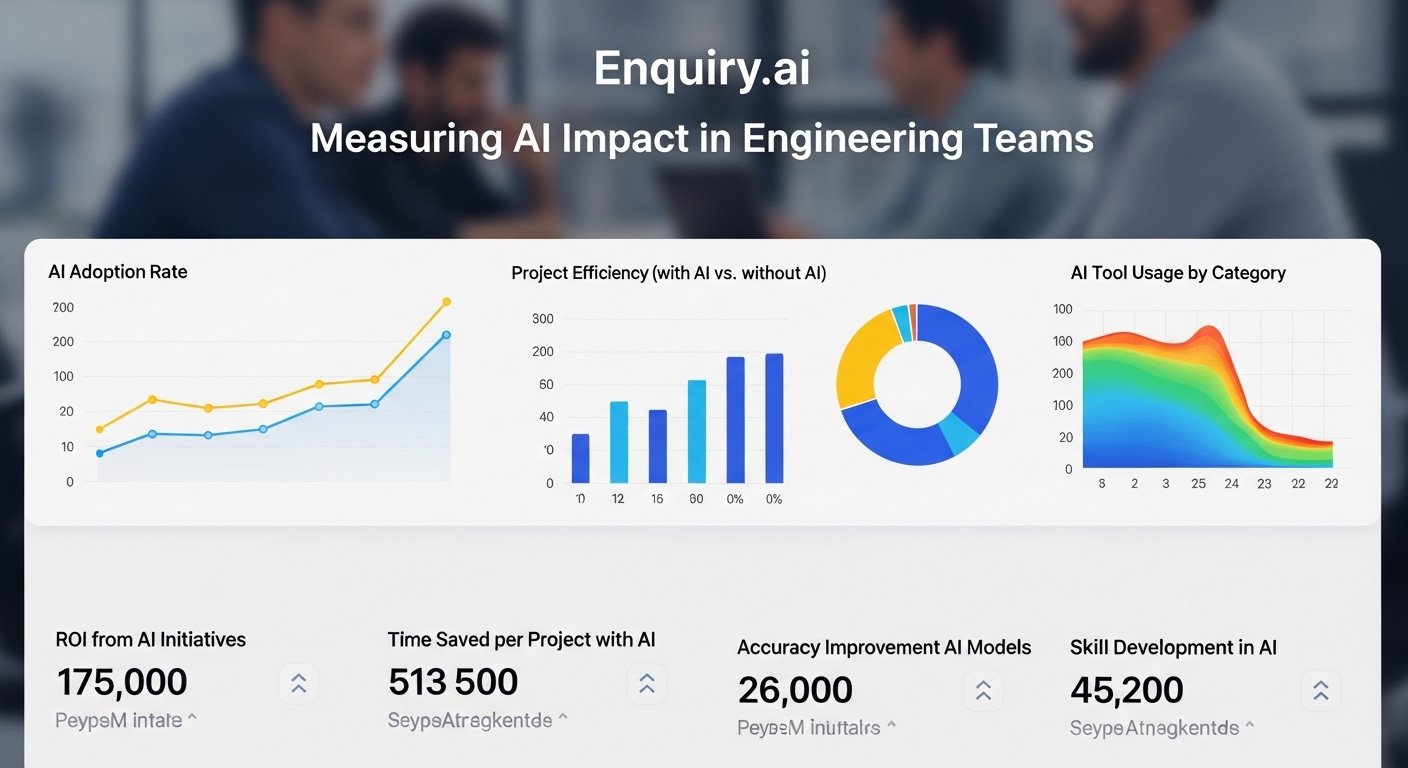
Artificial intelligence is rapidly transforming how engineering teams build, test, and deploy software. From code generation to automated testing and intelligent debugging, AI tools are becoming integral to modern development workflows. However, while adoption is rising, many organizations struggle to answer a fundamental question: Is AI actually making a measurable impact?
Enquiry.ai addresses this gap by helping organizations track, analyze, and optimize AI usage across engineering teams. Rather than relying on assumptions or anecdotal feedback, it provides data-driven insights that reveal how AI tools influence productivity, quality, and overall engineering performance.
Why Measuring AI Impact Matters
Adopting AI tools without measuring their effectiveness can lead to wasted resources and unclear ROI. Engineering leaders often invest in AI platforms expecting faster delivery and improved code quality, but without proper tracking, these outcomes remain uncertain.
Measuring AI impact helps teams:
- Understand whether AI tools are improving productivity
- Identify which teams or workflows benefit most
- Justify investment in AI technologies
- Detect inefficiencies or misuse of AI tools
By turning AI usage into quantifiable metrics, organizations can move from experimentation to strategic implementation.
Key Metrics for AI Adoption and Usage
To effectively evaluate AI performance, teams need to focus on specific, actionable metrics. Enquiry.ai enables tracking across several critical dimensions:
1. Adoption Rate
This measures how widely AI tools are being used across teams. It highlights whether engineers are embracing or resisting AI in their daily workflows.
2. Frequency of Usage
Tracking how often AI tools are used provides insight into their practical value. High adoption but low usage may indicate poor integration or limited usefulness.
3. Task Coverage
This metric identifies which engineering tasks—such as coding, testing, or documentation—are being supported by AI. It helps teams understand where AI delivers the most value.
4. Time Savings
One of the most important indicators, time saved per task or project shows whether AI is actually accelerating development cycles.
5. Output Quality
Measuring code quality, bug rates, or review feedback ensures that speed gains do not come at the expense of reliability.
Measuring Productivity Gains
One of the primary goals of AI adoption in engineering is increased productivity. Enquiry.ai provides visibility into how AI impacts output by comparing performance before and after implementation.
For example, teams can analyze:
- Reduction in coding time for specific features
- Faster completion of repetitive tasks
- Improved turnaround time in code reviews
By correlating AI usage with delivery metrics, organizations can determine whether productivity gains are consistent and scalable.
Evaluating Code Quality and Reliability
Speed alone is not enough—engineering teams must maintain high standards of code quality. AI-generated code can introduce errors if not properly validated, making quality measurement essential.
Enquiry.ai helps track:
- Bug frequency in AI-assisted code
- Test coverage improvements
- Code review feedback trends
These insights allow teams to strike the right balance between automation and oversight, ensuring that AI enhances rather than compromises software reliability.
Understanding Team-Level Impact
Not all teams benefit equally from AI adoption. Some may integrate AI seamlessly into their workflows, while others may struggle due to skill gaps or process misalignment.
Enquiry.ai enables team-level analysis by:
- Comparing AI usage across different teams
- Identifying high-performing teams and best practices
- Highlighting areas where additional training is needed
This granular visibility helps organizations tailor their AI strategies to maximize impact across the entire engineering function.
Identifying Bottlenecks and Optimization Opportunities
AI adoption is not a one-time process—it requires continuous refinement. Enquiry.ai helps uncover bottlenecks that limit the effectiveness of AI tools.
Common challenges include:
- Poor tool integration with existing workflows
- Over-reliance on AI for complex tasks
- Lack of proper training or guidelines
By identifying these issues early, organizations can optimize their AI implementation and ensure sustained benefits.
Driving Data-Backed Decision Making
One of the biggest advantages of Enquiry.ai is its ability to replace guesswork with data. Engineering leaders gain access to dashboards and reports that provide a clear picture of AI performance.
With these insights, organizations can:
- Make informed decisions about scaling AI usage
- Allocate resources more effectively
- Set realistic goals for AI-driven transformation
Data-backed strategies reduce risk and increase the likelihood of long-term success.
The Future of AI in Engineering Teams
As AI continues to evolve, its role in engineering will only expand. Tools will become more sophisticated, capable of handling complex tasks and offering deeper insights. However, the need for measurement will remain critical.
Platforms like Enquiry.ai will play a key role in this future by:
- Providing real-time analytics on AI performance
- Enabling continuous improvement through feedback loops
- Supporting organizations in building AI-first engineering cultures
By focusing on measurable outcomes, teams can ensure that AI adoption delivers tangible value rather than becoming just another trend.
Conclusion
AI has the potential to revolutionize engineering workflows, but its true value lies in measurable impact. Enquiry.ai empowers organizations to track adoption, analyze usage, and evaluate outcomes with precision.
By leveraging the right metrics and insights, engineering teams can move beyond experimentation and unlock the full potential of AI—driving productivity, improving quality, and achieving sustainable growth in an increasingly competitive landscape.